
Maria's Story – Acute Lymphoblastic Leukaemia (ALL)
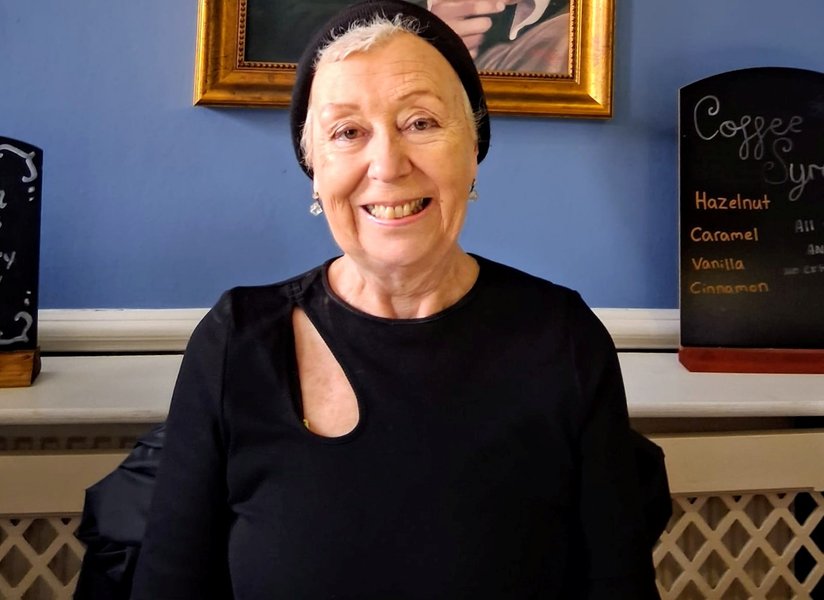
Maria was 67 when she was diagnosed with acute lymphoblastic leukaemia (ALL) in August 2025. After recovering from COVID, she thought she was getting back to normal life. Instead, she found herself facing a blood cancer diagnosis, life-threatening infections and difficult decisions about her treatment. Today, Maria is in remission and looking forward to the future with a new appreciation for life.
02 Jun 2026 - Leukaemia Care
Their story in brief
When something wasn't right
After recovering from COVID, Maria started to feel unwell again. At first, she wondered whether the virus had returned.
"I started to feel chronically exhausted and wondered whether COVID had returned."
The exhaustion was unlike anything she had experienced before. She developed a high temperature, began having hallucinations and became so weak that she could no longer walk upstairs.
Concerned by how quickly her health was deteriorating, Maria contacted her GP surgery. They acted immediately and arranged a blood test.
Within 12 hours, the results were back.
The Royal Bournemouth Hospital contacted her and wanted to admit her straight away.
"I went into denial. I asked whether I could check in the next day and let them know how I was feeling."
Later that evening, an out-of-hours doctor visited her at home.
"That was when I began to realise I was seriously ill."
A steep learning curve
The following day, Maria had a bone marrow biopsy and was admitted to hospital. Treatment began almost immediately.
The first few weeks were extremely challenging. Maria developed three life-threatening infections, which became the main focus of her medical team's attention. She spent time in an isolation ward while doctors worked to stabilise her condition.
Even though she enjoys her own company, Maria found the isolation difficult.
Throughout this period, she felt as though she had been thrown into a completely new world. Every day brought unfamiliar medical terms, test results and decisions.
"My overwhelming thought during this time was that this was a steep learning curve."
Maria decided that if she could not control what was happening, she could at least understand it.
She began learning the medical terminology and asking questions about her diagnosis and treatment.
"This gave me back a little control over my illness. Instead of passively listening to the doctors, I was asking meaningful questions which opened up a deeper understanding of my situation."
Looking back, Maria realised how much the loss of control had affected her.
"I had never been in a position before where I had to trust professionals with my life, and I was surprised at how quickly I did come to trust them."
She will always be grateful for the care she received.
"I will never forget the kindness and compassion they showed me and I will be eternally grateful to them for giving me this second chance in life."
A change in direction
Once Maria's condition became more stable, her consultant began discussing the possibility of a stem cell transplant.
A donor was found and everything appeared to be moving towards transplant. Maria focused completely on that goal.
"I began to chase the cure as if there were no other option."
Then her consultant presented her case to a national forum of specialists for their views.
The outcome was unexpected.
"The overwhelming response was that I did not need a transplant."
After spending months preparing herself for that path, it took time to adjust to the change in plans. Eventually, Maria came to understand that a stem cell transplant is not the right option for everyone.
"I was able to see how a transplant does not always suit everyone."
Looking forward
Maria is now in remission and has recently started maintenance treatment.
She has returned to living a normal life and is focused on rebuilding her fitness and strength.
"I have lots of energy and I concentrate on re-gaining my fitness levels."
Mindfulness and living with purpose have also become important parts of her life.
"There is no doubt that my experience has changed me as a person. I appreciate life in a different way."
Throughout her treatment, Maria and her husband were supported by family and friends who stepped forward when they were needed most.
"My friends, old and new, have wrapped themselves around me and have helped me and my husband in so many unexpected ways. I am truly grateful."
Maria has also used Leukaemia Care's travel insurance service and completed Buddy training. Having experienced the uncertainty of a blood cancer diagnosis herself, she hopes to use her experience to support others in the future.
"I am also grateful for this second chance in life, which I will live differently, and which I intend to enjoy and live to the full."
More Stories
Acute lymphoblastic leukaemia (ALL)
Acute lymphoblastic leukaemia (ALL) is a fast-growing type of leukaemia. Find out what it is, …
Buddy support
Our free Buddy Support Service matches you with a trained volunteer who has lived with …
Stem cell transplants
A stem cell transplant is an intensive type of treatment that replaces damaged or destroyed …
Want to share your story?
Your experience could help others going through a similar journey.
Get in Touch