


About acute lymphoblastic leukaemia
Acute lymphoblastic leukaemia (ALL) is a fast-growing blood cancer. It affects immature white blood cells called lymphoblasts. Find out about the signs and symptoms of ALL, tests you might have and what happens next.

Summary
- ALL is a fast-growing type of blood cancer. It affects immature white blood cells called lymphoblasts.
- There are two main types: B-cell ALL and T-cell ALL.
- We do not know the exact cause of ALL. It is not because of anything you did or did not do.
- The signs and symptoms of ALL vary from person to person. They include:
- Frequent or long-lasting infections
- Bruising or bleeding easily
- A rash of tiny dots under your skin
- Feeling breathless or dizzy and looking pale
- Fatigue
- Bone pain
- Losing weight without trying to
- Sweating a lot at night
- Fever, for no obvious reason
- ALL is diagnosed based on blood tests and bone marrow tests. Depending on your symptoms you might have further tests and scans.
- Treatment for ALL starts straight away. It happens in phases with different treatments at different times.
- We have separate information on each phase of treatment.
What is ALL?
ALL is a fast-growing type of blood cancer. It starts in bone marrow in immature white blood cells called lymphoblasts. These immature cells divide uncontrollably. They fill up your bone marrow and stop it making enough healthy blood cells. The abnormal blood cells can also build up in other parts of your body.
This webpage focuses on ALL in adults.
We have a separate webpage about ALL in children.
More about blood cells
Blood cells grow and develop in the spongy centre of your larger bones. This is called bone marrow.
There are three main types of blood cell:
- Red blood cells carry oxygen around your body.
- White blood cells fight infections.
- Platelets help clot your blood.
Types of ALL
There are two main types of ALL, depending on the exact type of blood cells that are affected:
- B-cell ALL. About 8 in 10 people with ALL have this type.
- T-cell ALL. About 2 in 10 people with ALL have this type.
More about B cells and T cells
Lymphoblasts usually develop into white blood cells called lymphocytes. There are two main types of lymphocyte:
- B lymphocytes (or B cells) make antibodies
- T lymphocytes (or T cells) recognise and destroy damaged or infected cells
ALL can affect either B cells or T cells.
B-cell ALL can be further grouped into subtypes. These are based on gene changes in the leukaemia cells. They have complicated names so they're usually shortened to their initials. If you have a particular subtype, your doctor will explain what it means.
Your haematology team will tell you what type of ALL you have and what you can expect. You may have different treatment depending on the type of ALL you have.
Who gets ALL?
ALL can affect people of any age. It is most common in children and young adults (25 and under), but it can affect older adults too. It is slightly more common in men than in women.
Each year in the UK:
- Around 240 adults are diagnosed with B-cell ALL
- Around 50 adults are diagnosed with T-cell ALL
This webpage focuses on ALL in adults. We have a separate webpage about ALL in children.
What causes ALL?
We do not know the exact cause of ALL. It is not because of anything you have or have not done.
People with ALL have genetic changes in their leukaemia cells that stop the cells from working properly. In most cases, we do not know why these genetic changes happen.
Most of these gene changes happen by chance during your lifetime. You do not get them from your parents and you cannot pass them on to any children you have.
There are some factors that can increase your chance of getting ALL. These include:
- If you have had another type of cancer in the past, including blood cancer
- If you have had some types of chemotherapy in the past
- If you have been exposed to high doses of radiation
- Some genetic conditions
Genetic conditions and ALL
Some genetic conditions can increase your risk of ALL. These include conditions called:
Having one of these conditions does not mean you will definitely get ALL. The risk is still low. But it is higher than in people who do not have these conditions.
Genetic changes in ALL
In ALL, changes in your genes, chromosomes or both mean your lymphocytes divide and mature uncontrollably. In most cases, we do not know why these genetic changes happen. You do not get them from your parents and you cannot pass them on to any children you have.

Genes are made up of DNA. They contain instructions for your cells on how to make the proteins your body needs.

Chromosomes are long, coiled strands of DNA that sit in the nucleus of each of your cells. Each chromosome contains lot of different genes.
Some gene and chromosome changes help your team work out your subtype of ALL. They will tell you what gene changes you have and explain what this means.
Your team will consider what genetic changes you have when deciding on the best treatment option for you.
Common gene changes in ALL
There are many different gene changes linked to ALL. They have complicated names so they are usually shortened to their initials.
Some gene changes can help your team work out your subtype of ALL. These include changes to genes called:
- KMT2A
- ETV6-RUNX1
- TCF3-PBX1
- IGH-IL3
- TCF3-HLF
Other common gene changes in ALL include:
- BCR-ABL1, usually known as the Philadelphia chromosome
- CRLF2
- NOTCH1
- TAL1
The Philadelphia chromosome
About 3 in every 10 people with B-cell ALL have a genetic change called a Philadelphia chromosome. Around 7 in every 10 do not have this change.
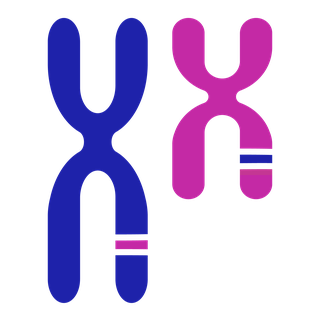
This chromosome forms when genetic material swaps between chromosome 9 and 22.
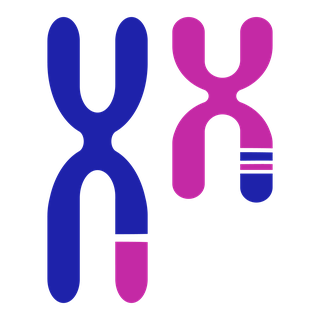
The swap makes two genes fuse together to make an abnormal fusion gene called BCR-ABL1. You might also see this written as BCR::ABL1 or t(9;22).
A genetic change called T315I can happen in the Philadelphia chromosome. This change can make ALL harder to treat with some types of targeted treatments.
Signs and symptoms of ALL
The signs and symptoms you might get vary from person to person. You might get some symptoms but not others. They include:

Infections that last a long time or keep coming back.

Bruising easily, or for no reason at all.

Unusual bleeding, like nosebleeds, bleeding gums after brushing your teeth or heavier periods than usual.

A rash of tiny red, purple or darker dots under your skin, or other skin problems. This may be harder to see on black or brown skin.

Feeling breathless or dizzy.

Looking pale. If you have black or brown skin, this may be easier to see on your palms, gums or the insides of your eyelids.

Feeling exhausted or worn out, even after resting.
Fever for no obvious reason.

Sweating a lot at night.

Losing weight without trying to.

Swollen lymph nodes (glands) that don't go down within a few weeks.

Tummy pain, bloating or feeling full quickly after eating.

Losing your appetite.

Bone pain
Diagnosis of ALL
You will need to have tests to diagnose ALL. These may include:

Blood tests. These are used to measure your numbers of red blood cells, white blood cells and platelets. They’re also used to check your liver and kidney function, and if you have any infections that could flare up during treatment.

Bone marrow test. This involves taking a sample of bone marrow, usually from the back of your pelvis, with a local anaesthetic.

Lumbar puncture. This is where a doctor uses a needle to collect sample of fluid from your lower back. This checks if leukaemia cells have spread to your central nervous system (your brain and spinal cord).

Specialist lab tests. Your doctor will send your blood, bone marrow and spinal fluid samples to the lab for specialist tests. These look for protein and genetic changes in your cells.

Other tests and scans. You may have a heart scan to help work out which treatment options are best for you. You also may have an ultrasound, CT or PET scan and a biopsy of your lymph nodes to see if your leukaemia cells have spread to other parts of your body.
Your test results may take a little while, which can be worrying. It's important for your haematology team to have all the results so they can make an accurate diagnosis. It can also help them work out the most suitable treatment options for you. We are here for you if you need support while you're waiting for your results.
Treatment of ALL
Treatment for ALL starts straight away. It happens in phases with different treatments at different times. These phases have different names. Often people call them:
Some people with ALL might have a stem cell transplant.
Your medical team will work out the most suitable treatment for you. They will tell you what they recommend for you and what you can expect.
Like all cancer medicines, treatment for ALL can cause side effects and late effects. We cover some of the most common ones in our treatment information.
We also have information to help you live well with leukaemia. And we are developing information on coping with the effects of leukaemia. Macmillan also have more information on side effects and late effects from treatment.
Sources
We used an AI tool to help identify relevant evidence sources for this webpage, such as scientific journals and clinical guidelines. A human checked the reliability of these sources.
Sources we used to develop this information
Choi JK, Xiao W, Chen X, Loghavi S, Elenitoba-Johnson KS, Naresh KN, Medeiros LJ, Czader M. of the World Health Organization classification of tumors of the hematopoietic and lymphoid tissues: acute lymphoblastic leukemias, mixed-phenotype acute leukemias, myeloid/lymphoid neoplasms with eosinophilia, dendritic/histiocytic neoplasms, and genetic tumor syndromes. Modern Pathology. 2024 May 1;37(5):100466. [https://doi.org/10.1016/j.modpat.2024.100466]
De Bie J, Quessada J, Tueur G, Lefebvre C, Luquet I, Toujani S, Cuccuini W, Lafage-Pochitaloff M, Michaux L. Cytogenetics in the management of T-cell acute lymphoblastic leukemia (T-ALL): Guidelines from the Groupe Francophone de Cytogénétique Hématologique (GFCH). Current Research in Translational Medicine. 2023 Oct 1;71(4):103431. [https://doi.org/10.1016/j.retram.2023.103431]
Gianni F, Belver L, Ferrando A. The genetics and mechanisms of T-cell acute lymphoblastic leukemia. Cold Spring Harbor Perspectives in Medicine. 2020 Mar 1;10(3):a035246. [https://doi.org/10.1101/cshperspect.a035246]
Girardi T, Vicente C, Cools J, De Keersmaecker K. The genetics and molecular biology of T-ALL. Blood, The Journal of the American Society of Hematology. 2017 Mar 2;129(9):1113-23. [https://doi.org/10.1182/blood-2016-10-706465]
Gökbuget N, Boissel N, Chiaretti S, Dombret H, Doubek M, Fielding A, Foà R, Giebel S, Hoelzer D, Hunault M, Marks DI. Diagnosis, prognostic factors, and assessment of ALL in adults: 2024 ELN recommendations from a European expert panel. Blood. 2024 May 9;143(19):1891-902. [https://doi.org/10.1182/blood.2023020794]
Gökbuget N, Boissel N, Chiaretti S, Dombret H, Doubek M, Fielding A, Foà R, Giebel S, Hoelzer D, Hunault M, Marks DI. Management of ALL in adults: 2024 ELN recommendations from a European expert panel. Blood. 2024 May 9;143(19):1903-30. [https://doi.org/10.1182/blood.2023023568]
Haematological Malignancy Research Network (HMRN). Statistics: B-lymphoblastic leukaemia. https://hmrn.org/statistics/ [Accessed Jun 2026].
Haematological Malignancy Research Network (HMRN). Statistics: T-lymphoblastic leukaemia. https://hmrn.org/statistics/ [Accessed Jun 2026].
Hoelzer D, Bassan R, Boissel N, Roddie C, Ribera JM, Jerkeman M, ESMO Guidelines Committee. ESMO Clinical Practice Guideline interim update on the use of targeted therapy in acute lymphoblastic leukaemia. Annals of Oncology. 2024 Jan 1;35(1):15-28. [https://doi.org/10.1016/j.annonc.2023.09.3112]
Iacobucci I, Mullighan CG. Genetic basis of acute lymphoblastic leukemia. Journal of Clinical Oncology. 2017 Mar 20;35(9):975-83. [https://doi.org/10.1200/JCO.2016.70.7836]
Inaba H, Greaves M, Mullighan CG. Acute lymphoblastic leukaemia. The Lancet. 2013 Jun 1;381(9881):1943-55. [https://doi.org/10.1016/S0140-6736(12)62187-4]
Kantarjian H, Aldoss I, Jabbour E. Management of adult acute lymphoblastic leukemia: a review. JAMA Oncology. 2025 Jul;11(7):771-8. [https://doi.org/10.1001/jamaoncol.2025.0613]
Kantarjian H, Jabbour E. Adult acute lymphoblastic leukemia: 2025 update on diagnosis, therapy, and monitoring. American Journal of Hematology. 2025 Jul;100(7):1205-31. [https://doi.org/10.1002/ajh.27708]
Malard F, Mohamad M. Acute lymphoblastic leukaemia. The Lancet. 2020 Apr;395(10230):1146-1162. [https://doi.org/10.1016/S0140-6736(19)33018-1]
Mrozek K, Harper DP, Aplan PD. Cytogenetics and molecular genetics of acute lymphoblastic leukemia. Hematology/Oncology Clinics of North America. 2009 Oct;23(5):991. [https://doi.org/10.1016/j.hoc.2009.07.001]
RM Partners West London Cancer Alliance, South East London Cancer Alliance, North Central and East London Cancer Alliance. Pan-London Haemato-Oncology Clinical Guidelines Acute leukaemias and myeloid neoplasms – part 1: acute lymphoblastic leukaemia [Internet]. 2020 Jan. Available from: https://rmpartners.nhs.uk/wp-content/uploads/2020/01/Pan-London-ALL-Guidelines-Jan-2020.pdf [Accessed Jun 2026].
Seiter K, Talavera F, Besa EC, Adoo CS. acute lymphoblastic leukaemia (aLL) [Internet]. Medscape. 2024 Nov 18. Available from: https://emedicine.medscape.com/article/207631-overview [Accessed Jun 2026].
Thames Valley Strategic Clinical Network NHS. Protocol: ALL Phase 2 Induction (25-60 years) [Internet]. 2019. Available from: https://nssg.oxford-haematology.org.uk/myeloid/protocols/ML-52-all-phase-2-induction.pdf [Accessed Jun 2026].
Thames Valley Strategic Clinical Network NHS. Protocol: ALL Phase 1 Induction (25-60 years) [Internet]. 2019. Available from: https://nssg.oxford-haematology.org.uk/myeloid/protocols/ML-51-all-phase-1-induction.pdf [Accessed Jun 2026].
University College London, National Cancer Research Institute, Cancer Research UK. UKALL14 A randomised trial for adults with newly diagnosed acute lymphoblastic leukaemia [Internet]. 2012 July 20. Available from: https://www.ctc.ucl.ac.uk/TrialDocuments/Uploaded/UKALL14%20-%20Protocol%20-%20v5.0%2020.07.12%20plus%20errata%2004.02.14_12042017_0.pdf
University College London, National Cancer Research Institute, Cancer Research UK. UKALL60+ A Phase 2 study for older adults with acute lymphoblastic leukaemia. https://www.northerncanceralliance.nhs.uk/wp-content/uploads/2019/01/UKALL60-Protocol-v3.0-21.05.2015.pdf [Accessed Jun 2026].
Watanabe K, Minami Y, Ozawa Y, Miyamura K, Naoe T. T315I mutation in Ph-positive acute lymphoblastic leukemia is associated with a highly aggressive disease phenotype: three case reports. Anticancer research. 2012 May 1;32(5):1779-83. https://ar.iiarjournals.org/content/32/5/1779 [Accessed Jul 2026]
Zhang X, Rastogi P, Shah B, Zhang L. B lymphoblastic leukemia/lymphoma: new insights into genetics, molecular aberrations, subclassification and targeted therapy. Oncotarget. 2017 Jul 15;8(39):66728. [https://doi.org/10.18632/oncotarget.19271]
Need support?
You are not alone. We're here for you whether you have a diagnosis yourself or know someone who has. If you'd like advice, support, or a listening ear, call our freephone helpline on 08088 010 444 or send a WhatsApp message to 07500 068 065.
Help us improve our information
We aim to provide information that’s reliable, up-to-date, and covers what matters to you. Please complete our short survey to help us improve our information and make sure it meets your needs.
About our information
This information is aimed at people in the UK. We do our best to make sure it is accurate and up to date but it should not replace advice from your health professional. Find out more about our information.
Page last reviewed: 13 July 2026
Updated September 2026
Next review due: 31 July 2029
Related content
Induction treatment for acute lymphoblastic leukaemia (ALL)
Treatment for B-cell or T-cell acute lymphoblastic leukaemia (ALL) happens in phases. The first phase …
Intensification and consolidation treatment for acute lymphoblastic leukaemia (ALL)
Treatment for B-cell or T-cell acute lymphoblastic leukaemia (ALL) happens in phases. The second main …
Maintenance treatment for acute lymphoblastic leukaemia (ALL)
Treatment for B-cell or T-cell acute lymphoblastic leukaemia (ALL) happens in phases. The third main …
Stem cell transplants
A stem cell transplant is an intensive type of treatment that replaces damaged or destroyed …
Living with leukaemia and related blood cancers
Advice and support for living with leukaemia and related blood cancers, including managing symptoms, treatment …
Support and community
Find emotional, practical and financial support for people affected by leukaemia, MDS and MPNs, including …
Need help understanding this information?
Our support team is here to answer your questions and provide guidance.
Contact Support