
Blinatumomab
Blinatumomab is an antibody therapy. It is used to treat some people with acute lymphoblastic leukaemia (ALL). Find out more about what blinatumomab is, how you have it, and what side effects you may get.

Summary
- Blinatumomab is an antibody therapy used to treat some people with acute lymphoblastic leukaemia (ALL).
- You have blinatumomab through a continuous drip into a vein. It’s powered by a portable pump that you can carry in a bag or on a belt.
- You have treatment in cycles. In each cycle, you have blinatumomab for 4 weeks followed by 2 weeks off. Your team will tell you how many cycles you’ll have.
- You stay in hospital for a few days at the start of your first cycle. You usually have the rest of your treatment at home.
- You go to hospital every few days to have your treatment bag changed.
- You may get some side effects from your treatment. Some people have very few side effects, whereas other people experience more serious side effects.
- Some side effects can be serious if they are not treated promptly. Most people do not get these but it’s important to know what to look out for. Seek urgent medical help if you:
- You have uncontrolled shaking (tremors)
- You feel confused or disorientated
- You have trouble speaking, writing or finding words
- You feel dizzy or light-headed or get new headaches
- You have a seizure (fit)
- You have fever or chills
- Tell your haematology team about any side effects you have. They may be able to suggest things you can do or give you medicines to help.
What is blinatumomab?
Blinatumomab is a type of treatment called an antibody therapy. It’s a lab-made antibody that’s designed to stick to two different proteins:
- A protein called CD19 on the surface of your leukaemia cells
- A protein called CD3 on immune cells
This helps your immune cells recognise and destroy the leukaemia cells.
Because blinatumomab sticks to two different proteins, you might hear some people call it a ‘bispecific’ antibody.
The brand name for blinatumomab is Blincyto.
Who might have it?
Your haematology team might recommend blinatumomab if you have B-cell ALL and your leukaemia cells make the CD19 protein. It also depends on the genetic changes in your leukaemia cells and how you’ve responded to treatment so far.
You might have blinatumomab:
- As consolidation treatment.
- If blood tests show you’re in remission but sensitive molecular tests can still detect low levels of leukaemia cells in your bone marrow. You might hear your team call this MRD positive. MRD stands for measurable residual disease.
- If you have ALL that has come back after treatment.
This information is about blinatumomab in adults.
Blinatumomab is also used to treat some children with ALL. Great Ormond Street Hospital for Children has information about blinatumomab in children.
Before having blinatumomab
Before having blinatumomab, you’ll have tests and scans to make sure it’s suitable for you and that you’re fit enough to have it. This might include:
Blood tests to check your blood cell counts, liver and kidney function and to check for any infections that could flare up during treatment

Bone marrow tests to check the level of leukaemia cells

Lab tests to look for genetic changes in your leukaemia cells and check what proteins they make
A lumbar puncture to check for leukaemia cells in the fluid around your brain or spinal cord

A pregnancy test

A heart tracing (ECG) and heart scan

A physical examination
Your team might also ask for a sample of your handwriting. During treatment, they can compare your handwriting to your pre-treatment sample. This helps check for some side effects of treatment.
Things to tell your haematology team
Before starting treatment, you should tell your haematology team if you:
- Have any allergies or have ever had an allergic reaction.
- Have ever had problems with your nervous system, like shaking (tremors), fits (seizures), abnormal sensations, memory loss, confusion, disorientation, loss of balance or finding it hard to speak.
- Have or think you have an infection.
- Have recently had or are due to have any vaccines, including travel vaccines.
- Are pregnant or breastfeeding.
Some medicines or drugs may interact with blinatumomab. It is important to tell your haematology team about any medicines or supplements you’re taking. This includes prescribed medicines and any medicines, drugs, supplements or herbal remedies you’ve bought without a prescription.
Having a central line fitted
You have blinatumomab through a continuous drip into a vein. If you don’t already have one, your haematology team will fit a central line. This can stay in throughout your treatment. There are different types, such as a PICC line, Hickman line or port-a-cath. Your team will explain what type they recommend and what fitting it involves.

Some central lines have two ends or ‘ports’. This means you can have treatment through one and have blood tests taken through the other, without any needles.
Pre-phase treatment
If you have a high leukaemia cell count, you may have treatment to lower it before starting blinatumomab. This is usually a steroid or chemotherapy. Your team might call it pre-phase treatment. It usually lasts around 5 days.
If you need it, your team will tell you what they recommend and what to expect.
Having blinatumomab
You have blinatumomab through a continuous drip into a vein. It’s powered by a portable pump that you can wear at home.
You go to hospital to have the pump set up. During your first treatment cycle, you stay in hospital for a few days so your team can monitor you for side effects. They’ll tell you how long they expect you to stay in.

After this, you go home wearing the pump in a bag or on a belt.
For the rest of your cycles, you usually have the infusion pump set up as an outpatient. Most people can then go home. But some people may need to stay in hospital for a few days. Your team will tell you if this is the case.
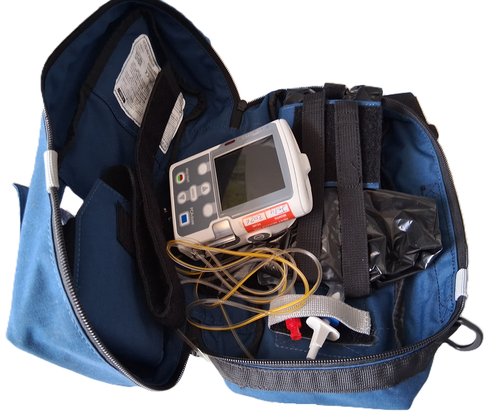
Blinatumomab pump in its bag
Photo provided by Maria, diagnosed with ALL in 2025
Treatment cycles
You have treatment in 6-week cycles. Each cycle involves a continuous drip of blinatumomab for 4 weeks. Then 2 weeks with no blinatumomab. Your team will tell you how many cycles you need.
You also have one dose of intrathecal chemotherapy in each cycle, usually during the 2 week break. This is medicine you have through an injection in your lower back. It aims to prevent or treat ALL in your central nervous system.
“I was able to get back to doing some light exercise, like yoga, and even sometimes took myself to the hospital on the train for bag changes. Having that bit of independence back after moving home with my parents during treatment was really important and beneficial for me.”
Starting treatment
- Around an hour before starting the blinatumomab drip, you have a steroid injection. This helps prevent reactions to the treatment.
- Then a nurse sets up the infusion pump. The blinatumomab is in a bag with a tube that connects to your central line. The pump controls the speed of the drip.
- You may have paracetamol during the first few days of each cycle to prevent fever.
- Your team will monitor you for any side effects or reactions.
Your team should give you a guide to having blinatumomab and a patient alert card. If they don’t, you can find these at the Electronic Medicines Compendium.
Having your infusion bag changed
Your infusion bag needs changing every few days during treatment. You usually go to a hospital day unit for this. Your team will tell you exactly how often you need it changed.
If you have any problems with your pump
Your team will explain what to do if you have any problems with your pump. They should give you batteries for the pump and show you how to change them.
Do not adjust the settings on the pump. Tell your team straight away if:
- There is a problem with the pump, or the pump alarm sounds
- The infusion bag is empty before you are due to have a bag change
- The infusion pump stops unexpectedly
Monitoring your treatment
You’ll have blood tests during treatment to check your blood cell counts and liver and kidney function. These check how your body is coping with treatment.
You may also have heart tracings (ECGs) or other tests to monitor side effects from treatment.
Tell your team if you have any side effects, worries or concerns about your treatment.
Measuring your response to treatment
During treatment you will have regular blood tests and occasional bone marrow tests to check how well your ALL is responding to treatment. What tests you have and how often depends on your individual situation.
The tests measure:
- Your blood cell counts. This is sometimes called your haematological response. It checks if your blood cell counts have returned to normal and whether specialists can see any leukaemia cells under a microscope.
- The level of leukaemia markers or leukaemia genetic changes in your blood cells. This is called your molecular response. It can detect very low levels of leukaemia cells in your bone marrow.
You might hear your doctor talk about measurable residual disease or MRD. If you are MRD negative, it means sensitive molecular tests cannot find any leukaemia cells in your body.
Precautions during treatment
There are some precautions to be aware of when you are having blinatumomab.
Contraception and pregnancy
Scientists do not know if blinatumomab harms unborn babies. And they do not know if it affects your fertility.
- If you could get pregnant, it’s important to use effective contraception. You need to do this while you’re having blinatumomab and for at least 48 hours after you stop.
- If you think you might be pregnant, tell your haematology team as soon as possible. They’ll talk to you about your treatment options. And about any precautions they may need to take for your baby after they’re born.
- If you’re planning to get pregnant, tell your haematology team. They can discuss your treatment options with you.
Breastfeeding
Scientists do not know if blinatumomab passes into breast milk . If it does, it could be a risk for breastfed babies or children.
You should not breastfeed when having blinatumomab and for at least 48 hours after you stop.
During this time, you can keep your milk supply up by expressing but you must discard the breastmilk. You must not use it.
Driving or operating machinery
Your haematology team may advise you not to drive or operate tools or heavy machinery during treatment. This is because blinatumomab can cause confusion, disorientation, problems with balance and coordination, fits (seizures) and fainting. If you experience any of these, you should not drive, or operate tools or heavy machinery while having blinatumomab.
Vaccinations
Vaccinations support your immune system and help protect against infections. There are two main types: live and non-live.
It is safe to have non-live vaccines if you are taking blinatumomab. But they might not work as well for you as they do in other people.
You should not have live vaccines:
- For at least 2 weeks before starting blinatumomab
- During blinatumomab treatment
- Until your level of white blood cells called B cells has recovered after treatment
Check with your doctor, nurse or pharmacist whether any vaccine they offer you is live or not.
Possible side effects
Like all medicines, blinatumomab can cause side effects. Some people have very few side effects, whereas others get more serious side effects. They may differ from day to day.
“On the whole, I had a positive experience with blinatumomab. Compared to induction treatment, I had fewer side effects and noticed an improvement in my energy levels.”
Your haematology team should tell you what side effects to look out for and who to contact if you need to.
If you’re worried about any symptoms or side effects, contact your haematology team. You do not have to wait until your next appointment.
If you have side effects that are serious or difficult to cope with, your haematology team might:
- Prescribe medicines to help manage some side effects
- Suggest things you can do to help you cope with side effects
- Recommend pausing or stopping blinatumomab treatment, if needed
Blinatumomab is a fairly new medicine, so it is being monitored more closely than older medicines. This helps identify new safety information. If you get any side effects that you think are due to blinatumomab, you can report them directly via the Yellow Card Scheme.
Side effects you might notice
This is not a full list of all the side effects that can happen. The patient information leaflet your haematology team give you will have more information. Or you can find the blinatumomab patient information leaflet at the Electronic Medicines Compendium.
Here, we list some of the more common side effects of blinatumomab. These affect more than 10 in every 100 people who take blinatumomab.
Infections. Contact your team straight away if you think you have an infection. Look out for:
- A high temperature (37.5°C or 38°C or higher)
- Aching muscles, shivering or chills
- Sore throat, sneezing, blocked or runny nose or earache
- Cough, chest pain, shortness of breath, or wheezing
- Burning or stinging when you pee, or peeing more often than usual
- Sickness or diarrhoea
- Headache
- Pain or redness around any cuts, wounds or drip cannulas
Tummy problems. You might get diarrhoea, constipation or tummy pain. You might feel sick or be sick.

Unexpected bruising or bleeding . You may have nosebleeds, bleeding gums or heavy periods. Look out for blood in your poo or pee, or red or purple spots under your skin. This may look different on black or brown skin. Tell your team if you notice any of these.

Brain and nervous system problems . You might feel dizzy, sleepy, drowsy, tired or less alert. You may have problems with your balance, walking or fiddly movements like fastening a button. Or, you may get burning, tingling, pain, weakness, numbness or a ‘pins and needles’ sensation.

Heart and circulation problems . You may have a fast, irregular heart rate, or swelling of your ankles, feet or legs.

Muscle and bone problems . You might have back pain, pain in your fingers or toes, or bone pain.

Skin problems . You may develop skin conditions, like eczema, psoriasis, acne or a rash.
Allergic reaction
Some people develop a reaction to the drip. This is most likely to happen within 48 hours of starting the first infusion, but it can happen later or in later cycles. It can sometimes be serious.
Your haematology team will monitor you closely for any signs of a reaction. . If it happens, they will stop blinatumomab for a while. They might give you steroids or antihistamines, if you need them.
Tell your haematology team immediately if you develop any of the following symptoms of a reaction:
- Swelling of your face, lips, tongue or throat
- Flushing or reddening of your face, neck or upper chest (this may be harder to see on black or brown skin)
- Wheezing, finding it hard to breathe
Sepsis
Blinatumomab can increase your risk of getting infections. Sometimes, this may lead to a severe response to infection, called sepsis. This needs urgent treatment.
Sepsis affects around 4 in every 100 people having blinatumomab. Around 96 in every 100 people do not get it.
If it does happen, it can be serious, so it’s sensible to know what to look out for.
Contact your doctor straight away if you get symptoms like:
- A fever or other signs of infection
- Confusion, slurred speech or not making sense
- Blue, grey or pale, blotchy skin, lips or tongue (on black or brown skin look on the palms of the hands or soles of the feet)
- A meningitis-like rash, which does not fade when you roll a glass over it
- Breathing difficulties, such as breathlessness or rapid breathing
Side effects your team might notice
There might be some side effects that your haematology team find during regular checks and blood tests. These include:
- Low levels of red blood cells, white blood cells or platelets
- Changes in your blood pressure
- Changes in your liver function
- Changes in the balance of salts and uric acid in your body
- Low levels of antibodies
Serious side effects to know about
Some side effects of blinatumomab can be serious. Your team will monitor you closely for these side effects so they can treat and manage them promptly if they happen.
These side effects happen to fewer than 10 in every 100 people having blinatumomab. More than 90 in every 100 people do not get them. But it’s important to know about them so you can seek help quickly if you need it.
Problems with your brain and nervous system (ICANS)
Blinatumomab can cause problems with your brain and nervous system. This is called immune effector-cell associated neurotoxicity syndrome (ICANS). It happens when inflammatory chemicals from immune cells leak into your nervous system.
Fewer than 10 out of every 100 people having blinatumomab get ICANS. More than 90 out of every 100 people do not get ICANS.
Your team monitor you so they can spot ICANS early if it develops. They might ask questions like the date and where you are. Or ask you to count backwards. They may check a sample of your handwriting.
Most people who get ICANS recover well with no long-term effects. If you develop it, you’ll stop blinatumomab for a while and have steroid treatment. Some people might have anti-epileptic medicines.
Tell your haematology team immediately if you develop any of the following symptoms of ICANS:
- Headache
- Tremors or shakes
- Feeling confused
- Changes to your handwriting
- Changes to how you walk
- Difficulty speaking or finding words
In serious cases, it can cause fits (seizures).
Cytokine release syndrome
Blinatumomab helps your immune cells recognise and destroy leukaemia cells. These immune cells release chemicals called cytokines, which activate more immune cells. This can trigger an inflammatory reaction called cytokine release syndrome (CRS).
About 3 in every 100 people having blinatumomab get CRS. About 97 in every 100 people having blinatumomab do not get CRS.
Your team will closely monitor you for signs of CRS so they can treat it quickly if it happens. If it develops, they might pause blinatumomab for a while.
Some people might need an immune-suppressing medicine called tocilizumab to treat CRS, or sometimes steroids.
Tell your haematology team immediately if you develop any of the following symptoms of CRS:
- Fever
- Chills
- Headaches
- Swelling
- Feeling dizzy or light-headed
- Fatigue or lack of energy
- Changes in your blood pressure
- Feeling sick
Tumour lysis syndrome
If lots of cancer cells die at once, they release a lot of chemicals into your blood. This can cause a condition called tumour lysis syndrome (TLS).
TLS affects around 1 in every 100 people having blinatumomab. Around 99 in every 100 people do not get TLS.
TLS can change the balance of salts and uric acid in your body. This can make you very unwell:
- Your kidneys may work less well
- Your heartbeat may become irregular
- You may have fits (seizures)
If you have a high leukaemia cell count before treatment, you might have medicine and fluids to prevent TLS. You’ll have blood tests, and your team will monitor how much you’re drinking and peeing. They’ll also closely monitor you for signs of TLS so they can treat it quickly if it happens. If it does, they’ll give you fluids and they might pause blinatumomab for a while.
Tell your haematology team immediately if you develop any of the following symptoms of tumour lysis syndrome:
- Pain in your sides
- Blood in your pee or not peeing as often as usual
- Fast or irregular heart rate
- Muscle cramps, spasms or weakness
- Confusion
- Feeling or being sick, diarrhoea
If blinatumomab is not successful
If blinatumomab doesn’t work well for you, or causes side effects that are serious or difficult to cope with, your doctor will discuss your options with you. They might suggest changing your dose, pausing or stopping treatment.
They will talk to you about other treatment options that might be suitable for you.
Finding out treatment hasn’t worked as expected can be distressing. We’re here if you need support. Call our freephone helpline on 08088 010 444, message us on WhatsApp at 07500 068 065 or email us at support@leukaemiacare.org.uk.
We have more information on coping with your feelings if blood cancer comes back or does not respond to treatment.
Sources
Sources we used to develop this information
Amgen Ltd. BLINCYTO 38.5 micrograms powder for concentrate and solution for solution for infusion – Summary of Product Characteristics. Feb 2026. Available at: https://www.medicines.org.uk/emc/product/5064/smpc [Accessed Jul 2026]
Amgen Ltd. BLINCYTO 38.5 micrograms powder for concentrate and solution for solution for infusion – Patient Information Leaflet. Feb 2026. Available at: https://www.medicines.org.uk/emc/product/5064/pil [Accessed Jul 2026]
Gökbuget N, Boissel N, Chiaretti S, Dombret H, Doubek M, Fielding A, Foà R, Giebel S, Hoelzer D, Hunault M, Marks DI. Management of ALL in adults: 2024 ELN recommendations from a European expert panel. Blood. 2024 May 9;143(19):1903-30. [https://doi.org/10.1182/blood.2023023568]
Inaba H, Greaves M, Mullighan CG. Acute lymphoblastic leukaemia. The Lancet. 2013 Jun 1;381(9881):1943-55. [https://doi.org/10.1016/S0140-6736(12)62187-4]
Kantarjian H, Jabbour E. Adult acute lymphoblastic leukemia: 2025 update on diagnosis, therapy, and monitoring. American Journal of Hematology. 2025 Jul;100(7):1205-31. [https://doi.org/10.1002/ajh.27708]
Malard F, Mohamad M. Acute lymphoblastic leukaemia. The Lancet. 2020 Apr;395(10230):1146-1162. [https://doi.org/10.1016/S0140-6736(19)33018-1]
National Institute for Health and Care Excellence (NICE). Blinatumomab for previously treated Philadelphia-chromosome-negative acute lymphoblastic leukaemia. 2017. Technology appraisal guidance [TA450]. Available at: https://www.nice.org.uk/guidance/ta450 [Accessed Jul 2026]
National Institute for Health and Care Excellence (NICE). Blinatumomab for treating acute lymphoblastic leukaemia in remission with minimal residual disease activity. 2019. Technology appraisal guidance [TA589]. Available at: https://www.nice.org.uk/guidance/ta589 [Accessed Jul 2026]
National Institute for Health and Care Excellence (NICE). Blinatumomab with chemotherapy for consolidation treatment of Philadelphia-chromosome-negative CD19-positive minimal residual disease-negative B-cell precursor acute lymphoblastic leukaemia. 2025. Technology appraisal guidance [TA1049]. Available at: https://www.nice.org.uk/guidance/ta1049 [Accessed Jul 2026]
Thames Valley Cancer Alliance NHS. Cytokine release syndrome assessment and management [Internet]. 2024. Available at: https://nssg.oxford-haematology.org.uk/advanced-cellular-therapies/documents/clinical-management/CAR-6-1-appendix-1-crs-assessment-management.pdf [Accessed Aug 2026]
Thames Valley Cancer Alliance NHS. Immune Effector Cell-Associated Neurotoxicity Syndrome assessment and management [Internet]. 2024. Available at: https://nssg.oxford-haematology.org.uk/advanced-cellular-therapies/documents/clinical-management/CAR-6-1-appendix-2-icans-assessment-management.pdf [Accessed Aug 2026]
Thames Valley Cancer Alliance NHS. Protocol: Blinatumomab [Internet]. 2025. Available at: https://nssg.oxford-haematology.org.uk/myeloid/protocols/ML-28-blinatumomab.pdf [Accessed Jul 2026]
Need support?
You are not alone. We're here for you whether you have a diagnosis yourself or know someone who has. If you'd like advice, support, or a listening ear, call our freephone helpline on 08088 010 444 or send a WhatsApp message to 07500 068 065.
Help us improve our information
We aim to provide information that’s reliable, up-to-date, and covers what matters to you. Please complete our short survey to help us improve our information and make sure it meets your needs.
About our information
This information is aimed at people in the UK. We do our best to make sure it is accurate and up to date but it should not replace advice from your health professional. Find out more about our information.
Page last reviewed: 20 October 2026
Updated October 2026
Next review due: 31 October 2029
More information
Acute lymphoblastic leukaemia (ALL)
Acute lymphoblastic leukaemia (ALL) is a fast-growing type of leukaemia. Find out what it is, …
Intensification and consolidation treatment for acute lymphoblastic leukaemia (ALL)
Treatment for B-cell or T-cell acute lymphoblastic leukaemia (ALL) happens in phases. The second main …
Relapsed or refractory acute lymphoblastic leukaemia (ALL)
Relapsed acute lymphoblastic leukaemia (ALL) is when ALL comes back after successful treatment. Refractory ALL …
Support and community
Find emotional, practical and financial support for people affected by leukaemia, MDS and MPNs, including …
Buddy support
Our free Buddy Support Service matches you with a trained volunteer who has lived with …
Support groups
Connect with others affected by leukaemia through local and online support groups run by Leukaemia …
Need help understanding this information?
Our support team is here to answer your questions and provide guidance.
Contact Support